With medical costs in India surging by 12-14% annually, choosing the right health insurance is critical for financial security. Hospital bills for common procedures can easily cross ₹5-10 lakhs, especially in urban areas. The dilemma many face is whether to opt for individual health insurance or family health insurance. Both offer robust protection, but the best choice depends on your family size, ages, health profiles, and budget.
As of December 2025, the complete exemption of 18% GST on individual and family health insurance premiums (effective since September 22, 2025) has made both options more affordable than ever. Combined with IRDAI's inclusive guidelines—like no upper age limit and shorter waiting periods—this is an ideal time to evaluate and choose wisely.

(Suggested Featured Image: Family under a protective shield with health icons, symbolizing security through family health insurance.)
Understanding Individual Health Insurance
Individual health insurance is a policy where each person gets their own dedicated sum insured. Premiums are calculated based on the individual's age, medical history, and lifestyle.
Key features:
- Separate coverage limit for each member.
- No impact from other family members' claims.
- Ideal for personalized needs, especially with pre-existing conditions.
- Higher no-claim bonus accumulation per person.
With 0% GST, premiums are directly lower, and tax benefits under Section 80D remain (up to ₹25,000 per person, ₹50,000 for seniors).

(Image: Illustration of a person covered by personal health insurance, highlighting individual protection.)
Understanding Family Health Insurance (Family Floater)
Family health insurance, commonly known as a family floater plan, provides a single shared sum insured for the entire family (self, spouse, children, sometimes parents).
Key features:
- One premium for multiple members.
- Flexible to add newborns or spouses.
- Shared coverage—claims by one reduce the limit for others.
- Often includes maternity and child-specific benefits.
Family floaters are popular for young families due to cost efficiency.

(Image: Happy Indian family symbolizing the unity and shared protection of a floater plan.)
Key Differences: Individual vs Family Health Insurance
Here's a clear comparison to help you decide:
| Aspect | Individual Health Insurance | Family Health Insurance (Floater) |
|---|---|---|
| Sum Insured | Separate for each person | Single shared amount for all members |
| Premium Cost | Higher (separate premiums per person) | Lower (one premium covers everyone) |
| Claim Impact | One person's claim doesn't affect others | One claim reduces coverage for the whole family |
| Best For | Families with elderly members or varying health risks | Young, healthy families with dependent children |
| No-Claim Bonus | Applied individually (faster buildup) | Applied to the shared sum insured |
| Flexibility | Customized per person | Easy to manage one policy |
| Tax Benefits | Up to ₹25,000 per person (more for multiple policies) | Single deduction based on premium |
| Add-Ons/Riders | Tailored per individual | Common for the family |
Modern plans from insurers like Niva Bupa, HDFC ERGO, and Care Health offer restore benefits and unlimited recharge to mitigate shared sum risks in floaters.
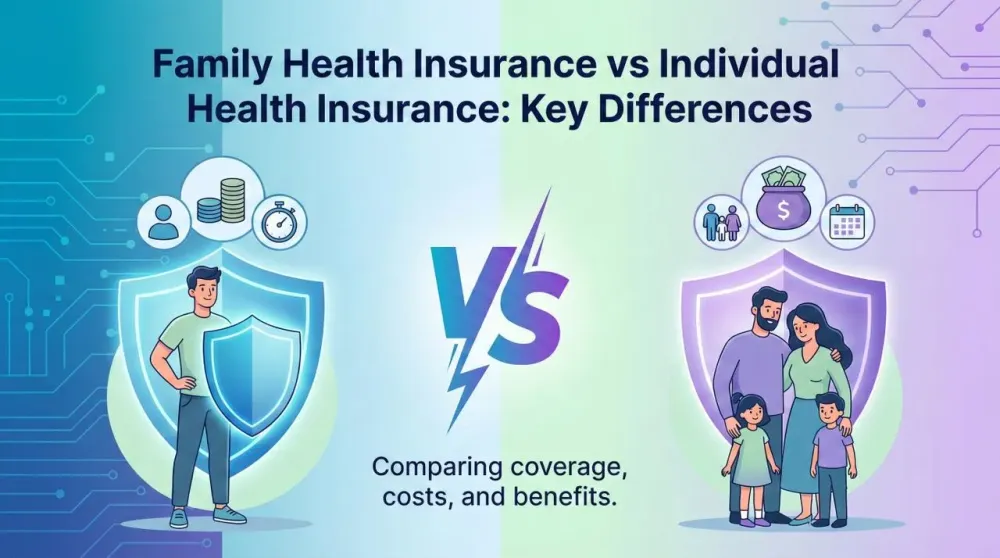
(Image: Comparison chart illustrating individual vs family floater plans.)
Pros and Cons of Individual Health Insurance
Pros:
- Dedicated coverage—no depletion by others.
- Better for seniors or those with pre-existing diseases (PEDs).
- Higher cumulative benefits over time.
- Portability without affecting family.
Cons:
- More expensive overall.
- Multiple policies to manage and renew.
Pros and Cons of Family Health Insurance
Pros:
- Cost-effective—significant savings on premiums.
- Convenient single policy management.
- Covers dependents easily.
- Amplified by 0% GST savings.
Cons:
- Risk of sum insured exhaustion if multiple claims.
- Premium based on eldest member's age.
- Less ideal if health risks vary widely.

(Image: Indian family discussing insurance options, representing informed decision-making.)
When to Choose Individual Health Insurance
Opt for individual health insurance if:
- Your family includes senior citizens (higher individual risks).
- Members have different health profiles or PEDs.
- You want uninterrupted coverage for each person.
- Budget allows for higher premiums in exchange for security.
Many combine: Base individual for parents + floater for young members.
When to Choose Family Health Insurance
Go for family health insurance if:
- You have a young family with kids.
- Everyone is relatively healthy.
- Budget is a priority—enjoy lower premiums post-GST waiver.
- You prefer simplicity.
Add super top-up for extra coverage at low cost.
Factors to Consider in 2025
- Sum Insured: ₹15-25 lakhs minimum in metros.
- Network Hospitals: 10,000+ for cashless claims.
- Claim Settlement Ratio: >95%.
- Waiting Periods: Max 3 years for PEDs (IRDAI mandate).
- Add-Ons: Critical illness, OPD, AYUSH (full coverage mandated).
- No Age Limit: Anyone can buy now.
Compare on platforms like Policybazaar for real-time quotes.
(Image: Person saving on premiums, illustrating cost benefits.)
Top Plans to Consider
- Individual: HDFC ERGO Optima Secure (double coverage from day 1).
- Family Floater: Niva Bupa ReAssure 2.0 (unlimited restore), Care Supreme.
Tips to Save on Premiums (Both Types)
- Buy early for lower rates.
- Choose long-term (2-3 years) for discounts.
- Maintain healthy lifestyle for rewards.
- Use super top-up for high coverage.
- Leverage 0% GST and 80D benefits.
Conclusion: Make the Right Choice for Your Family
The debate between individual health insurance and family health insurance boils down to your unique needs. For young, healthy families, a floater offers great value and simplicity. For diverse age groups or higher risks, individual plans provide better security.
With GST exemption making premiums lower and IRDAI ensuring inclusivity, 2025 is the best time to act. Assess your family's needs, compare plans online, and secure protection today—peace of mind is priceless.
